

Root canal treatment
A root canal removes inflamed or infected pulp from inside a tooth so you can keep your natural tooth. It is done under local anesthetic, most teeth are treated in a single visit, and most people are back to their normal routine within a day or two.
The treatment
What happens in a root canal
The whole treatment in four movements. The detail follows below.
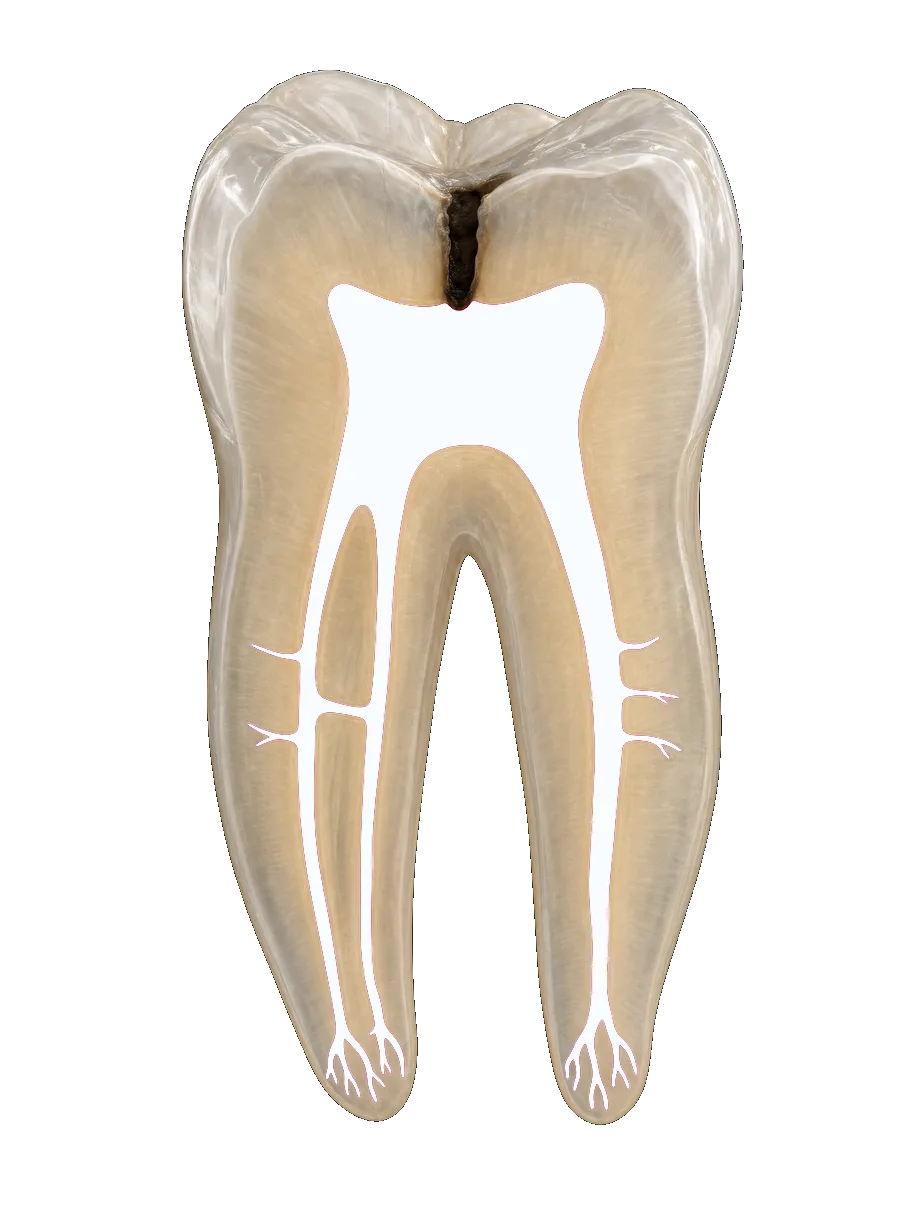
- 01
The pulp is inflamed
Deep inside the tooth, the soft tissue is swollen and sore. That is the pain that brings most people to us.
- 02
The canals are cleaned
Under the microscope, we open the tooth, remove the inflamed tissue and clean every canal, branch by branch.
- 03
The space is filled
The clean canals are filled and sealed from the tip of each root upward, so nothing can grow back inside.
- 04
The tooth is sealed and at rest
A permanent filling closes the opening, never a temporary one. Most people are back to their normal routine within a day or two.
When a root canal is needed
At the center of every tooth is the pulp, a soft tissue of nerves and blood vessels. Deep decay, a very deep filling, a crack or chip, repeated dental work, gum disease or an injury can let bacteria reach it. Once the pulp is inflamed or infected, it cannot heal on its own.
Signs include:
- a severe toothache, especially when chewing
- sensitivity to hot or cold that lingers
- tender or swollen gums near the tooth
- a pimple or blister on the gum
- a tooth that has darkened, or a chipped or cracked tooth
Sometimes there are no symptoms at all, and the problem shows up on an x-ray.
About your tooth
A tooth has two main parts: the crown, the part above the gum that you can see, and the root or roots, which sit in the bone beneath the gum. The hard outer layer of the root is dentin. Inside each root runs a channel the length of the tooth, the root canal. It holds the pulp, the nerves, blood vessels and soft tissue that people often call the “nerve” of the tooth.
Endodontics is the branch of dentistry, recognized by the American Dental Association, that treats the pulp and the tissues around the root. Root canal treatment removes the diseased pulp and nothing else. The supporting tissues around the root are left intact, so the tooth keeps working normally once it is restored. An injured pulp is removed because, left in place, it can become infected or irritate the tissues around the tooth.
Your first visit
Dr. El-Refai examines the tooth herself and takes 2D and 3D images. She reads your 3D scan closely and goes through it with you on the screen, so you understand exactly what is happening and every option you have. If you are in pain, she numbs the area and gets you comfortable that day. We then schedule your treatment, usually for a separate visit.
If you feel anxious, you can seek oral sedation from your medical doctor, or we can schedule you for IV sedation with a board-certified anesthesiologist, who comes to our office.
During treatment
- Numbing. The tooth is fully numbed and isolated to keep it clean and dry.
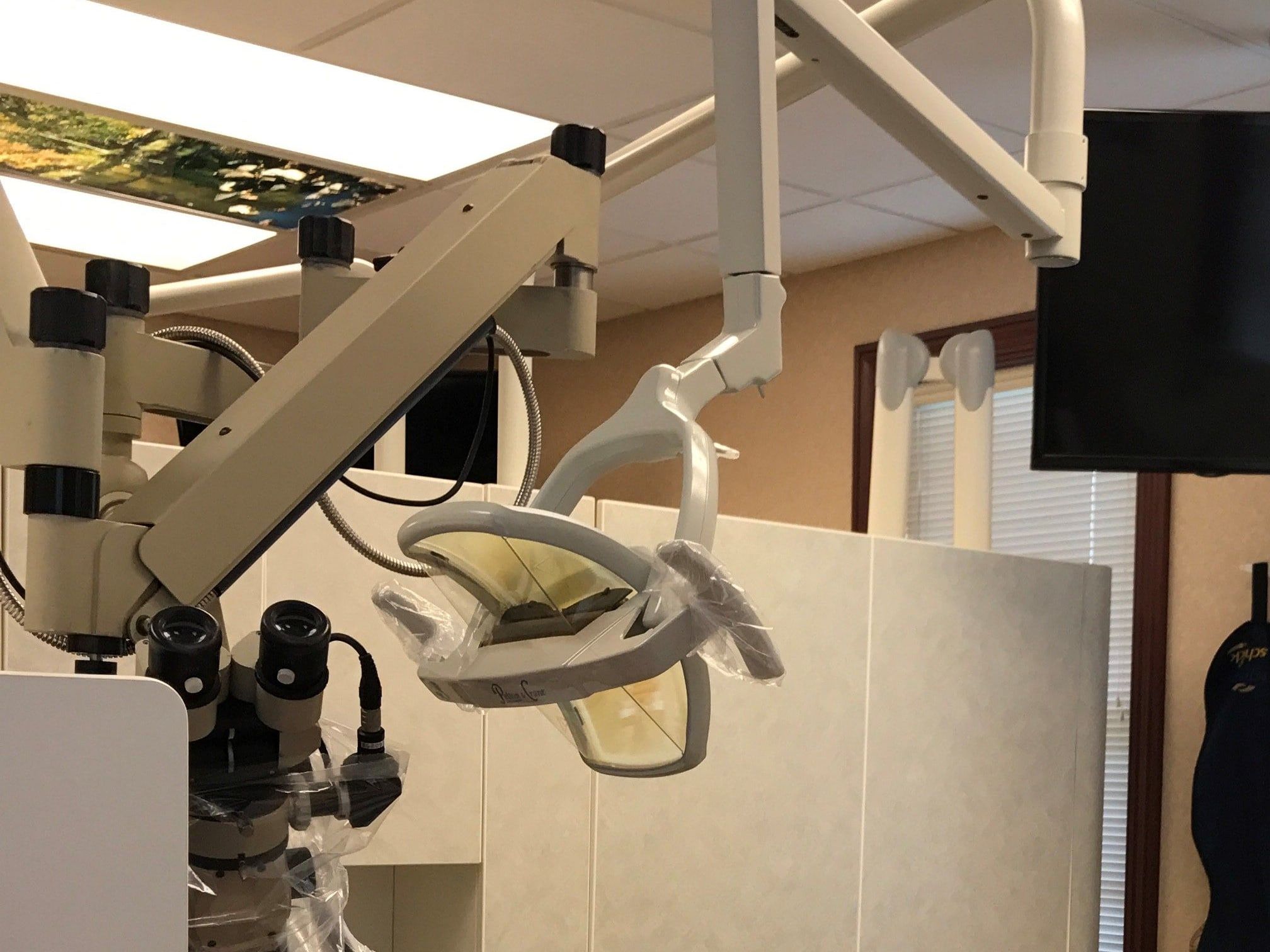
- Cleaning. Working under a surgical operating microscope, Dr. El-Refai removes the damaged pulp and cleans the canals. For many teeth we use the GentleWave procedure, which cleans deep into the complex branches of the root canal system.
- Sealing. The canals are filled with a bioceramic sealer and gutta-percha, both biocompatible materials that seal the tooth against reinfection.
- A permanent filling. Every treated tooth is closed with a permanent filling, never a temporary one, to protect it from leakage, one of the main reasons root canals fail.
Most teeth are treated completely in this single visit.
Afterward
Your tooth may feel tender for a day or two. Chew on the other side until your tooth is fully restored. If it needs a crown, your general dentist places it, and we send them your report and images. A short check-up visit with us in the month after treatment is included, so we can see how the tooth is healing.
How well root canals work
Root canal treatment is one of the most common dental procedures: the American Association of Endodontists counts more than 15 million every year, more than 41,000 a day. In a study of 1.46 million root canal treated teeth across the United States, 97 percent were still in place eight years later. Of the few that were extracted, most had never received a crown, which is why the restoration afterward matters so much. If your tooth is not a good candidate, or the chance of success is low, we tell you at your consultation, or as soon as a complication becomes clear during or after treatment.
Keeping your tooth or pulling it
Nothing a dentist can make looks, feels or works quite like your own tooth. Saving it with root canal treatment should be the first choice whenever it is possible, because a natural tooth:
- chews efficiently
- keeps its normal biting force, so you can go on eating the foods you enjoy
- keeps its natural appearance
- limits the need for more costly, ongoing dental work
A few things to keep in mind:
- If you are offered a choice between root canal treatment and extraction, choose the root canal. If your dentist recommends an extraction, ask whether root canal treatment is an option, and if you are told it is not, ask why and ask for a referral to an endodontist. Endodontists have at least two years of advanced training in root canal procedures after dental school.
- Pulling a tooth is not the cheaper choice. An extracted tooth has to be replaced with a denture, bridge or implant to stop the other teeth from shifting, and the cost of the extraction plus the replacement is often higher than the cost of saving the tooth. Most dental insurance plans cover endodontic treatment.
- It is not the quicker choice either. Root canal treatment is usually one visit here, sometimes two. An extraction takes one visit, but the denture, bridge or implant that follows takes several more with your dentist, and may involve the neighboring teeth and gums.
- Once a tooth is pulled, the neighboring teeth can drift out of line, the socket collapses and the jawbone there shrinks. A root canal keeps your bite and your bone as they are.
Common myths
“Root canals are painful.” Modern anesthetics make treatment about as comfortable as having a filling. The pain people remember is usually the toothache before treatment, which a root canal relieves: in a systematic review of the research, about 81 percent of patients had pain before treatment, about 40 percent a day afterward, and about 11 percent a week later.
“Root canals make you sick.” This idea traces to research from the 1920s by Dr. Weston Price, who argued that bacteria trapped in a treated tooth could cause disease elsewhere in the body, and recommended extraction instead. His methods were criticized at the time, better-designed studies had discredited his findings by the early 1930s, and in 1951 the Journal of the American Dental Association published a special review of the evidence that returned the standard of care to saving teeth with root canal treatment. There is no valid scientific evidence linking root canal treated teeth to disease elsewhere in the body. Bacteria live in every mouth, including around teeth that have never had a cavity, and a healthy immune system deals with them; an extraction, a far more traumatic procedure, sends a significantly higher rate of bacteria into the bloodstream than a root canal confined to the inside of the tooth. In 2007 the American Heart Association narrowed the list of dental procedures and heart conditions that call for antibiotics beforehand, and in 2012 it found no evidence that gum disease causes heart disease; the two often occur in the same people because they share risk factors such as smoking, age and diabetes.
“Pulling the tooth is the simpler choice.” An extracted tooth has to be replaced to keep your bite and jawbone healthy, which usually means more treatment and more cost. Nothing looks, feels or works quite like your natural tooth, and an artificial one can make you avoid some foods. Healthy root canal treated teeth serve millions of people for many years, and many last a lifetime.
Avoiding a root canal in the future
Good care at home is the best defense. Brush twice a day and floss daily, keep up regular check-ups and cleanings, and go easy on hard, crunchy and sticky foods. Never chew ice; it is one of the most common ways teeth break. Wear a mouthguard for contact sports and a night guard if you grind your teeth in your sleep, since injuries and grinding both lead to cracked teeth and root canals. And never ignore tooth pain: the sooner the cause is found, the better you will feel and the better the chance of saving the tooth.
More videos
Step by step
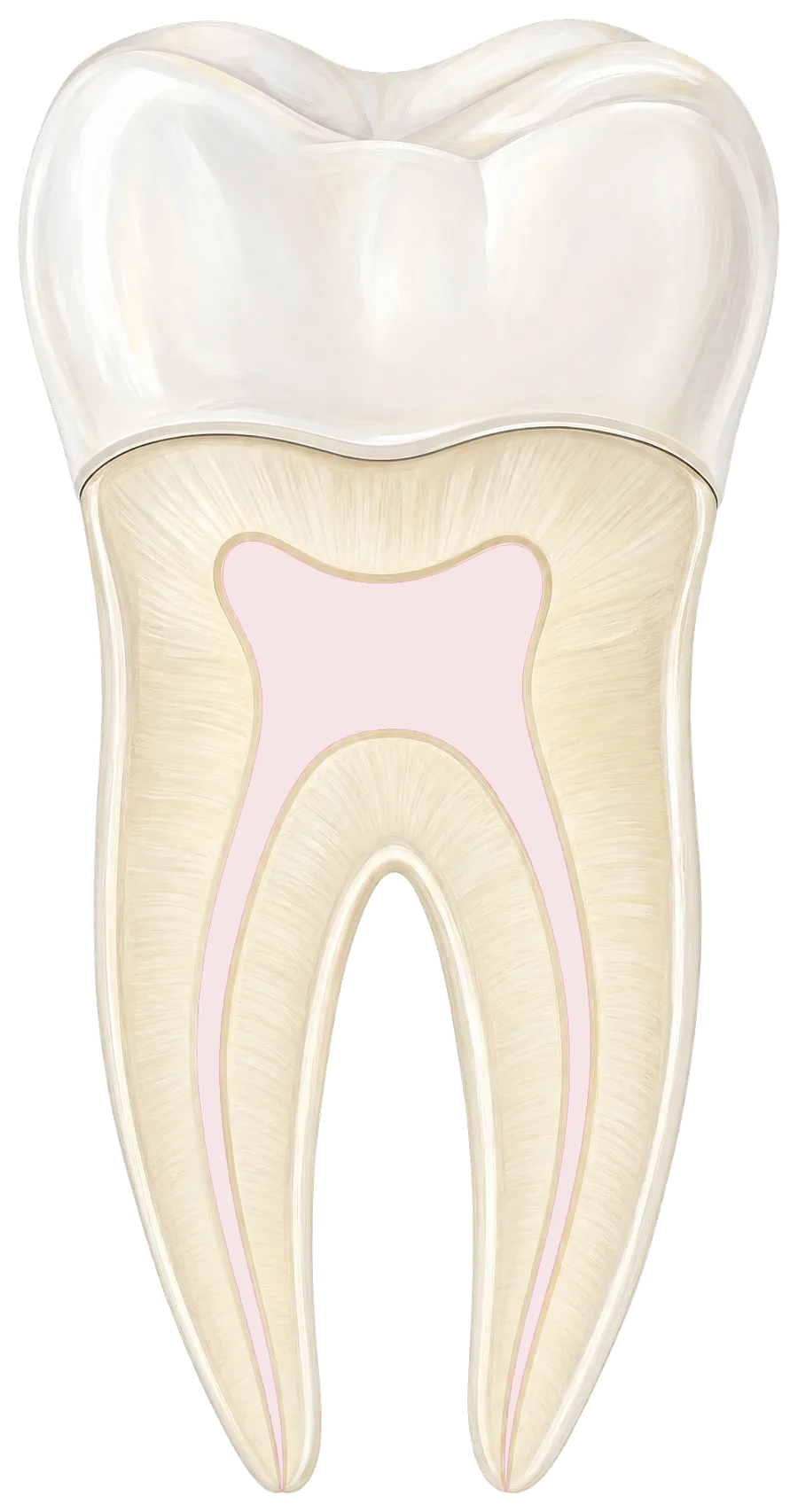
A healthy tooth, with living pulp inside the chamber and canals -
Deep decay or a crack lets bacteria reach the pulp, which becomes inflamed or infected -
The pulp is removed and the canals are cleaned, shaped and disinfected -
The canals are filled and sealed -
A permanent filling or crown closes the tooth, and the tissue around the root heals
Insurance and fees
In network with most dental PPO plans. We check your benefits and tell you what to expect before treatment. How payment works
Sources7 references
- Salehrabi R, Rotstein I. Endodontic treatment outcomes in a large patient population in the USA, an epidemiological study. Journal of Endodontics, 2004.
- Pak JG, White SN. Pain prevalence and severity before, during, and after root canal treatment, a systematic review. Journal of Endodontics, 2011.
- Easlick KA. An evaluation of the effect of dental foci of infection on health. Journal of the American Dental Association, 1951.
- Wilson W et al. Prevention of infective endocarditis, guidelines from the American Heart Association. Circulation, 2007.
- Lockhart PB et al. Periodontal disease and atherosclerotic vascular disease, does the evidence support an independent association? A scientific statement from the American Heart Association. Circulation, 2012.
- American Association of Endodontists. Myths about root canals.
- American Association of Endodontists. Press kit, endodontic facts.
What patients say
Mara JJanuary 2023 Dr. El-Refai and her team are amazing and I will be using her for all future endodontic procedures! I usually have bad dental anxiety and going here felt very relaxing. She really takes her time to explain everything. I did get my root canal completed today and the whole procedure was calming and I almost fell asleep! She gave me great breathing techniques to help calm my anxiety and definitely knew what she was doing! Please if you’re nervous or scared of getting a root canal, consider coming here!
View on Google

Relief starts with a call
Call or text, and we will find the soonest time that works. If you are in pain, tell us when you call, and we will do everything we can to see you the same day.