

Cracked teeth
A cracked tooth can cause pain that comes and goes, often a sharp twinge when you bite or let go. Finding the crack early gives the best chance of saving the tooth.
Signs of a cracked tooth
- a sharp pain when you bite, or when you release the bite
- sensitivity to hot or cold that comes and goes
- pain that comes and goes, and is hard to pin to one tooth
Because the pain is not constant, a cracked tooth can be hard to diagnose. Tell us exactly when it hurts; that pattern is a clue.
Why a crack hurts
When you chew, the pieces on either side of the crack move slightly and irritate the pulp inside the tooth. When you let go, the crack closes quickly, which can cause a sharp pain. Over time the pulp becomes damaged, and the tooth may hurt even when you are not chewing. A crack can also let bacteria reach the pulp, and an infection there can spread to the bone and gum around the tooth.
Types of cracks
Craze lines. Tiny cracks in the outer enamel only. They are common in adults, superficial and usually of no concern.
Fractured cusp. A weakened cusp, one of the points on the chewing surface, breaks off or is removed by your dentist. A fractured cusp rarely damages the pulp, so a root canal is usually not needed, and your dentist restores the tooth, usually with a crown.
Cracked tooth. A crack runs from the chewing surface down toward the root, sometimes below the gum line and sometimes into the root itself. The pulp is often damaged, so root canal treatment is usually needed, followed by a crown. A cracked tooth that is not treated gets worse and can end in the loss of the tooth, which is why finding it early matters.
Split tooth. Usually the result of a cracked tooth left untreated, with the crack now dividing the tooth into separate segments. A split tooth cannot be saved whole. Depending on where the split runs and how far, part of the tooth can sometimes be kept with endodontic treatment and a restoration from your dentist.
Vertical root fracture. A crack that begins in the root and runs toward the chewing surface. These often cause few symptoms and can go unnoticed for a long time. If part of the tooth can be saved by removing the fractured root, endodontic surgery may be an option; otherwise the tooth has to be extracted.
What to do
Call us if you notice any of these signs. The sooner a crack is found, the more treatment options you have, and the better the chance of keeping the tooth.
The five kinds of crack
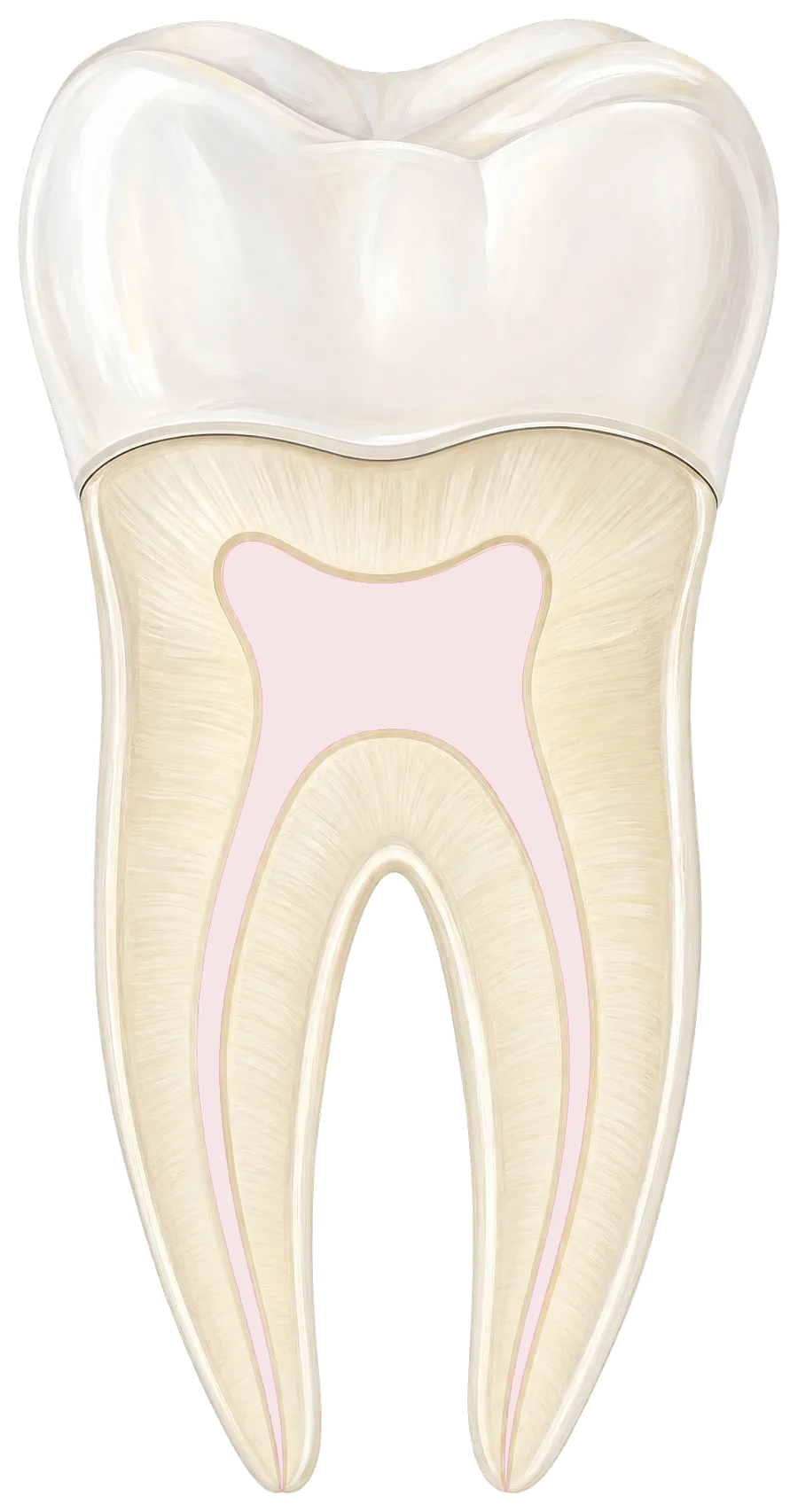
Craze lines: tiny cracks in the outer enamel only, usually harmless -
Fractured cusp: a piece of the chewing surface breaks away -
Cracked tooth: a crack runs from the chewing surface toward the root -
Split tooth: the crack has separated the tooth into pieces -
Vertical root fracture: a crack that begins in the root
Insurance and fees
In network with most dental PPO plans. We check your benefits and tell you what to expect before treatment. How payment works

Relief starts with a call
Call or text, and we will find the soonest time that works. If you are in pain, tell us when you call, and we will do everything we can to see you the same day.