

Apicoectomy
When inflammation lingers at the tip of a root after a root canal, a small surgical procedure called an apicoectomy can treat it directly and save the tooth.
When it is needed
Most teeth heal after a root canal. Occasionally a tooth stays inflamed, or a problem appears that does not show on a flat x-ray, such as a small fracture or an unusual canal near the root tip. An apicoectomy, also called root-end resection, lets Dr. El-Refai see and treat that area directly.
What happens
- The area is numbed with local anesthetic.
- A small opening is made in the gum to reach the bone over the root tip.
- The inflamed tissue and the very end of the root are removed.
- A small filling seals the end of the root.
- The gum is closed with a few stitches.
The bone heals around the root naturally over the following months.
After surgery
Some discomfort and slight swelling are normal while the area heals. We will recommend the right pain relief, and cold compresses on the outside of the cheek help in the first day. If pain does not respond to the medication, call us.
Less common effects
- Lower back teeth. The root tips of lower back teeth can sit near a nerve that gives feeling to the lip, chin and gums. Dr. El-Refai checks this on your 3D scan and plans around it. Rarely, the nerve is irritated, causing tingling or numbness that usually resolves over days to months.
- Upper back teeth. These roots sit near the sinuses. If an opening into the sinus occurs, it usually heals on its own; avoid blowing your nose for two to three days, and sneeze with your mouth open.
- Infection. Occasionally an infection develops after surgery. It usually needs only a quick visit and, often, a week of antibiotics.
Step by step
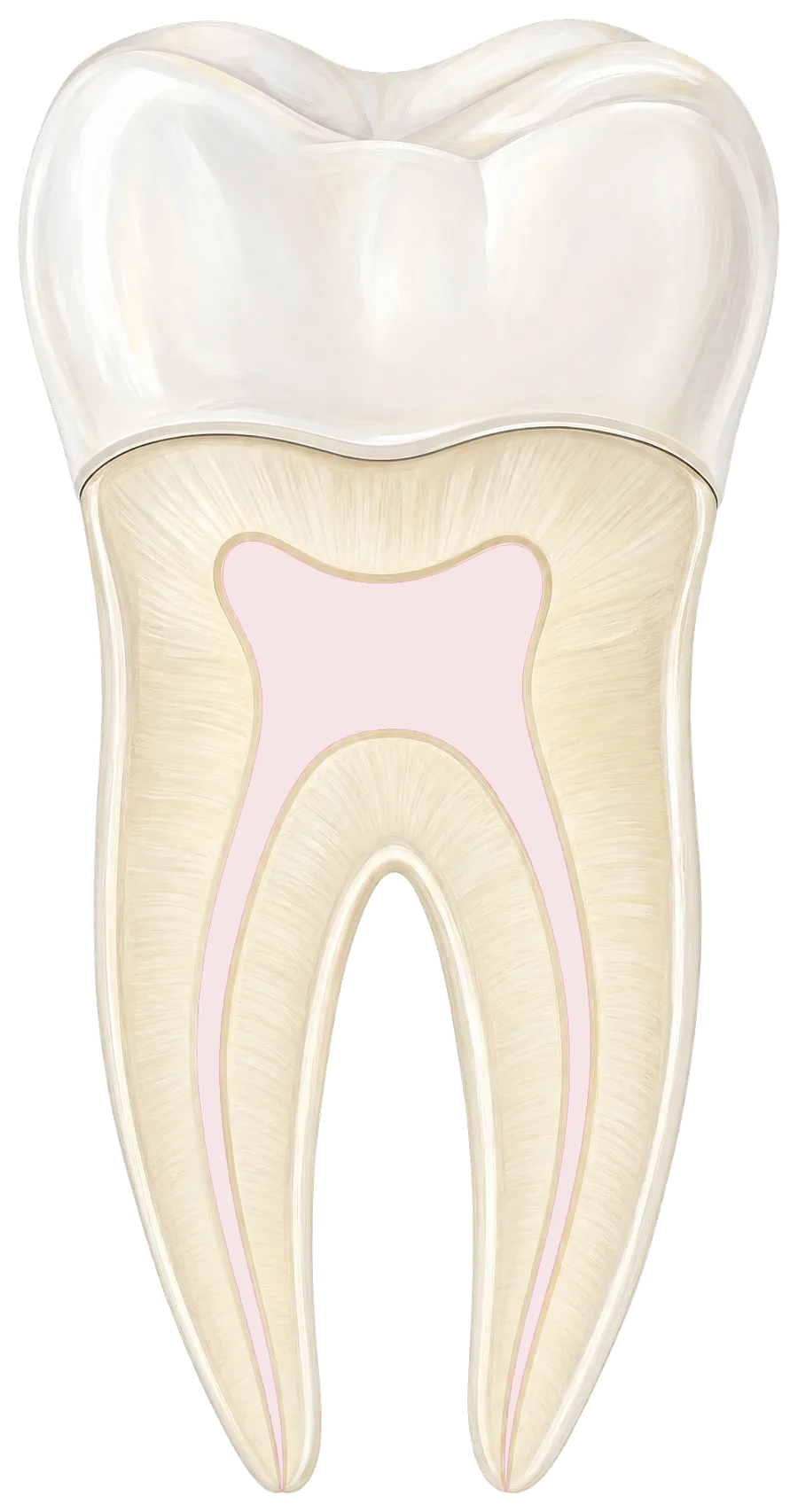
Infection persists at the root tip after a root canal -
Through a small opening in the gum, the tip of the root and the infected tissue are removed -
A small filling seals the end of the root canal, and the gum is closed with a few stitches -
Bone heals around the root tip over the following months
Insurance and fees
In network with most dental PPO plans. We check your benefits and tell you what to expect before treatment. How payment works

Relief starts with a call
Call or text, and we will find the soonest time that works. If you are in pain, tell us when you call, and we will do everything we can to see you the same day.