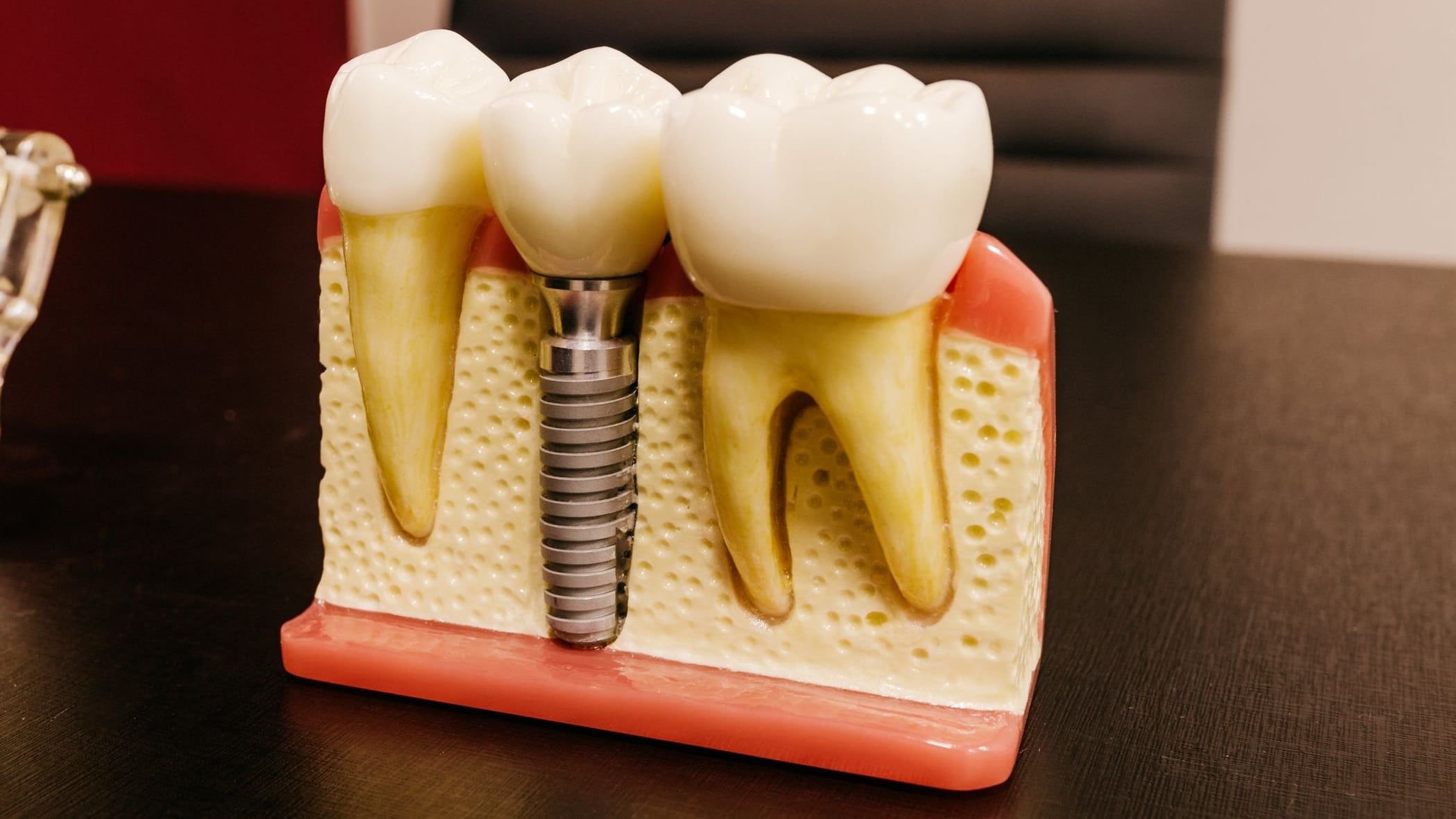
When a tooth is infected or badly inflamed, there are usually two paths. You can save it with a root canal and a crown, or you can have it taken out and, in most cases, replaced with an implant. Both are good treatments. The question is which one is right for your tooth, and the research is more helpful here than most people expect.
How long each one lasts
The best comparison comes from a systematic review by Iqbal and Kim, who pooled 55 studies of single-tooth implants and 13 studies of teeth restored after a root canal. At every follow-up period they looked at, the survival of the two was statistically the same. Their conclusion was that the choice between them should rest on other factors, because the outcomes themselves do not separate the two.
A larger review led by Torabinejad, covering 143 studies, reached the same place: over the long term, root canal-treated teeth and single implants survived at similar rates, and both outlasted bridges.
Real-world numbers are just as reassuring. In a study of more than 1.4 million teeth treated across all 50 states, 97 percent were still in place eight years after their root canal.
Why “success rates” can be misleading
You may read that implants have a higher success rate. The Torabinejad review explains why that comparison does not hold up: implant studies and root canal studies define success differently, so their success rates cannot be compared directly. Survival, whether the tooth or implant is still there and working, is the fairer measure, and on that measure the two are close.
What each path involves
Saving the tooth usually takes one treatment visit here, followed by a crown from your general dentist. You keep your own root, the ligament that cushions it, and the feel of a natural tooth when you chew.
Removing the tooth is the first step of a longer process. After the extraction, the site heals before an implant is placed, and the implant needs time to fuse with the bone before the final crown goes on. Some patients also need a bone graft.
Leaving the space empty is the one option the research does not favor. The limited data available suggest that people who lose a tooth and do not replace it fare worse than those who choose either repair.
Cost
A narrative review of patient-centered outcomes found that the initial cost, the lifetime cost and the cost-effectiveness of root canal treatment all compare very well with the alternatives of an implant or a bridge. Your own numbers depend on the tooth and your insurance, so we give you a written estimate before anything is scheduled. See insurance and fees.
When extraction is the better choice
Some teeth cannot be saved predictably. A crack that runs down the length of the root, too little healthy tooth left to hold a crown, or severe bone loss around the root can all make an implant the wiser investment. When that is the case, we tell you so, and we will not recommend treatment we do not expect to last.
How we help you decide
At your first visit, Dr. El-Refai examines the tooth, takes 2D and 3D images herself, and walks you through them on the screen, so you see the roots, the infection and any cracks. Then we lay out your options, including extraction if it makes sense, so the decision is yours and it is an informed one. Learn more about root canal treatment or cracked teeth.