

Regenerative endodontics
Sometimes a damaged pulp can be kept alive instead of removed. For young patients whose roots are still growing, that can let the tooth keep developing normally.
What regenerative endodontics is
Regenerative endodontic procedures are biologically based treatments for a tooth whose pulp has been damaged. Instead of filling the canal space with an inert material, we place bioactive materials, such as MTA, that encourage living tissue to grow back, so the tooth can regain a healthy pulp and dentin. The aim is to restore normal pulp function and, where possible, avoid removing the pulp at all. This matters most for immature permanent teeth in children and teens, whose roots are still developing, and the approach has also been used successfully in some fully mature teeth.
Vital pulp therapy
A vital tooth is one whose pulp is still living, even if it has been damaged. When the damage or decay is not too severe, the pulp can often be saved. Dr. El-Refai looks for an adequate blood supply in the tooth, healthy surrounding tissue, and normal tissue at the root tip that is not overly tender before recommending it. She then places a bioactive material such as MTA over the healthy pulp and seals the tooth. Saving the living pulp lets you avoid a root canal and keep a living tooth. If vital pulp therapy does not succeed, a root canal may still be needed later.
Revascularization
Revascularization is a regenerative procedure for immature teeth whose pulp has died. Because immature teeth have thinner walls, a smaller size and shorter roots, they are more vulnerable when the pulp is lost. Preserving the tooth and encouraging new tissue lets the root keep growing to its proper length and thickness, keeps the tooth in place, and avoids an extraction. It usually takes at least two appointments, with regular follow-up visits to confirm that the pulp is alive.
How it works
- The damaged or decayed part of the tooth is removed and the canal space is disinfected.
- A bioactive material is placed, following strict guidelines. In a tooth whose pulp has died, bleeding from the tissue around the root is encouraged into the canal; in a living tooth, bleeding is controlled.
- The blood brings stem cells into the canal space. Together with growth factors released from the tooth, they form a scaffold for new pulp tissue to grow on.
- The tooth is sealed to keep bacteria out and give the new tissue a chance to establish itself.
It can take 18 to 24 months before the tooth shows signs of a living pulp. In some cases the procedure does not succeed, and other treatment, such as nonsurgical or surgical root canal treatment, may be needed.
Advantages
- allows the root to keep developing
- protects the root against fracture
- strengthens the walls of the root
- saves the tooth from losing its pulp
- preserves jawbone development, especially around immature teeth
- a biological solution that preserves the health of the tooth
For children and young adults
Preserving a permanent tooth damaged by injury or disease is especially important for children and young adults. Regenerative treatment lets these teeth continue to mature and grow stronger, so they can last a lifetime.
What to expect
These treatments need follow-up visits over months to confirm the tooth is healing and the root is developing. We keep your general dentist informed at each step.
For referring dentists
Case selection, consent and the protocol follow the American Association of Endodontists’ clinical considerations for a regenerative procedure, which the AAE revises as new findings arrive. These are one source of guidance among others, and we are glad to discuss any case before you refer it.
How a young tooth can keep growing
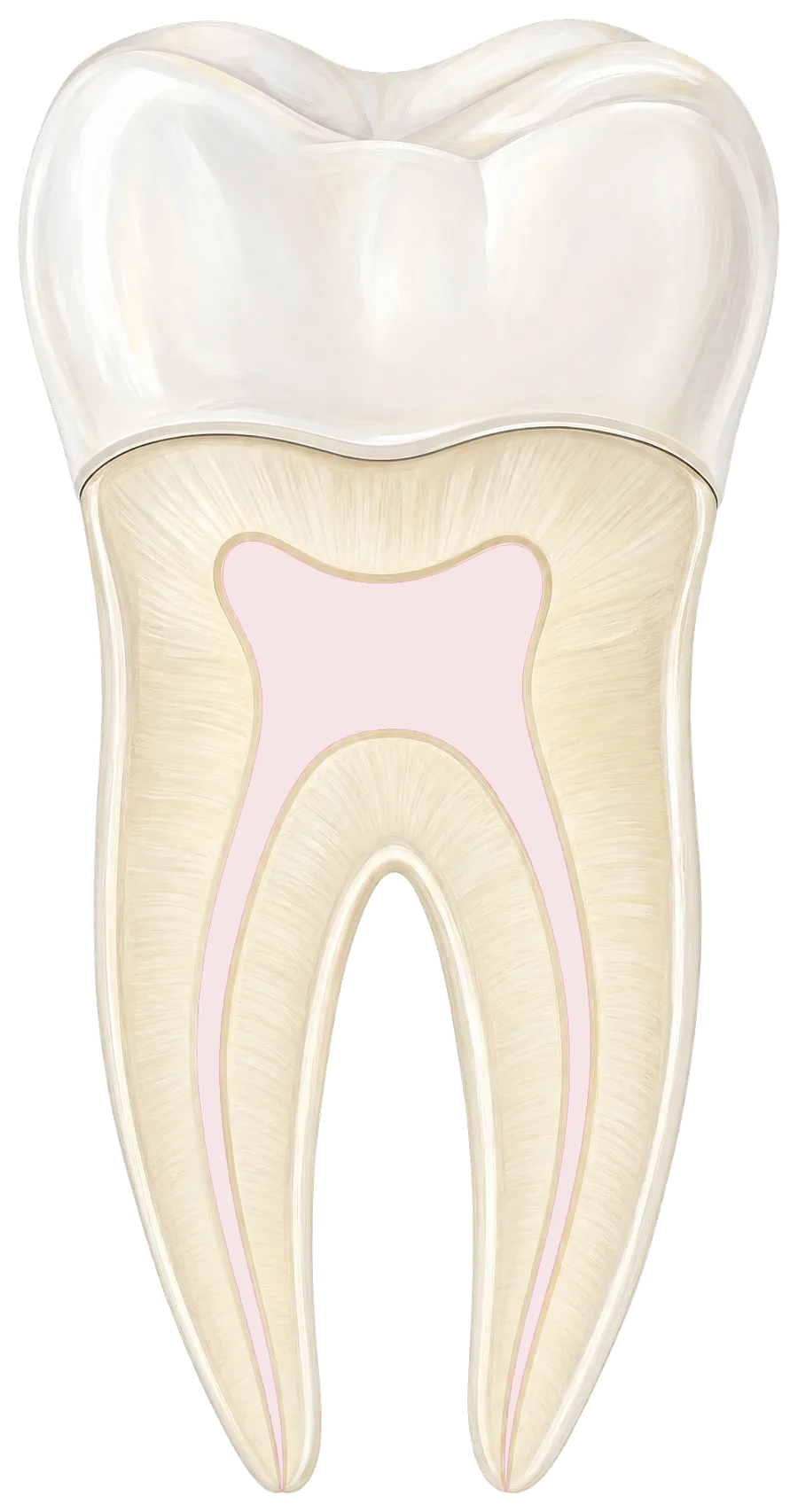
A young tooth whose root has not finished forming, with an open tip -
Its pulp is injured or infected -
The canal is gently disinfected, protecting the tissue that can still grow -
Over time the root can continue to develop and the walls thicken
Insurance and fees
In network with most dental PPO plans. We check your benefits and tell you what to expect before treatment. How payment works

Relief starts with a call
Call or text, and we will find the soonest time that works. If you are in pain, tell us when you call, and we will do everything we can to see you the same day.